
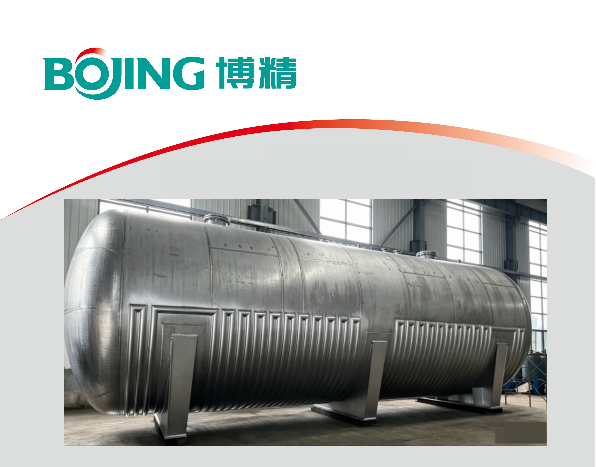
Industrial Stainless Steel Storage Tanks & Custom Pressure Vessels Shandong Bojing Chemical Machinery Co., Ltd. delivers rigorous technical verification and precision fabrication for non-standard industrial storage tanks, surge vessels, and processing columns based entirely on client-provided blueprints. We strictly enforce premium raw material traceability and verify design limits to eliminate operating vulnerabilities and fluid fluid […]

Industrial Stainless Steel Storage Tanks & Custom Pressure Vessels

Shandong Bojing Chemical Machinery Co., Ltd. delivers rigorous technical verification and precision fabrication for non-standard industrial storage tanks, surge vessels, and processing columns based entirely on client-provided blueprints. We strictly enforce premium raw material traceability and verify design limits to eliminate operating vulnerabilities and fluid fluid leakage risks in long-term chemical containment fields.

Technical Specifications
ParameterCustom Fabrication & Verification Range
Volume Capacity0.5 m³ to 150 m³ (Available in Vertical, Horizontal, or Underground layouts)
Materials of ConstructionPremium Stainless Steel (SUS304, SUS316L, SUS321) | Optional Anti-Corrosive PTFE Lining
Configurations & HeadsElliptical Head, Torispherical Head, Conical Bottom, and Flat Bottom structures
Design Pressure RangeFull Vacuum Conditions, Atmospheric scale, up to 2.5 MPa positive operating pressure
Insulation & FinishesRock wool or polyurethane foam with stainless outer cladding | Internal mirror polish (Ra ≤ 0.6 μm) or pickling passivation
Manufacturing CodesASME Section VIII Div.1 Compliant Rules, China GB150, and Storage Tank Code GB50341
Main Product Features

Rigorous Material Traceability

All incoming stainless plates and flanged fittings undergo chemical composition verifications, complete with 100% traceable Mill Test Certificates (MTC) to secure asset durability.

Seamless Weld Quality Management

Strict heat-input boundaries prevent intergranular corrosion tendencies in acidic process mediums. Core seams are verified via tailored NDT criteria to secure reliable boundaries.

Tailored Anti-Corrosive Linings

Where native stainless metallurgy falls short under aggressive fluids, we deploy heavy-duty PTFE/four-fluorine lining configurations verified to specific boundary envelopes.

Versatile Structural Customization

Fabrication strictly aligns with required supports (saddles, legs, skirts), nozzle flange classes, level gauges, and drain setups to guarantee zero-error site installation.

Blueprint Verification Process

01. Document & Border Verification

We cross-check filling coefficients, working vacuum thresholds, and maximum operating temperatures to calculate compliant shell stress boundaries.

02. Nozzle Reinforcement Check

Technical teams re-verify area replacement metrics around manholes and discharge nozzles to prevent structural cracks under piping loads.

03. Segregated Workshop Assembly

Stainless steel fabrication is executed inside isolated bays to eliminate carbon-ion contamination. NDT validation (RT or PT) aligns completely with drawing criteria.

04. Pressure & Leakage Validation

Pressurized vessels undergo precise hydraulic or pneumatic seal testing, while atmospheric tanks receive rigorous water-fill tests to guarantee absolute zero-leakage exit.

Maritime Protection & Global Delivery

Prior to dispatch, all storage tanks and processing vessels undergo intensive internal wash-outs, clean passivations, and flanged port sealing configurations. Vessels are securely anchored onto robust export steel saddles or fumigated timber cradles, encased in multi-layer protective shrink wrapping and vacuum rust-inhibiting foil barriers. This safeguards precision nozzles and machine surfaces against salty marine moisture and transport vibration loads during long-distance shipping.

Engineering Technical FAQ
Q: How does your technical team review and verify potentially vulnerable reinforcement designs around vessel nozzles or manholes upon receiving third-party blueprints?
A: In non-standard vessel fabrication, nozzle entries and manholes represent high-stress concentration zones highly vulnerable to cyclic pressure transitions and piping vibrations. Our team re-calculates the opening reinforcement metrics strictly against ASME or GB150 codes. If we discover insufficient reinforcement padding under heavy vacuum boundaries, or notice a weld joint profile that complicates full-penetration welding in the workshop, we proactively notify the client and design institute to issue optimizations, eliminating structural fatigue cracking risks before production.
Q: For aggressive corrosive mediums handled under atmospheric pressure, what pragmatic, cost-effective material alternatives does Bojing suggest if the original blueprint specifies expensive high-grade specialty alloys?
A: If the medium is highly corrosive but operated under mild atmospheric or low-pressure conditions (not requiring extreme autoclave temperatures or severe pressure spikes), manufacturing the entire vessel from solid titanium or nickel alloys introduces immense capital burdens. Based on practical manufacturing data, we objectively advise clients and design institutes to optimize the structure by using standard industrial stainless steel (SUS304/316L) as the structural load-bearing outer shell, integrated with an internal premium PTFE (four-fluorine) lining. This composite configuration delivers matching chemical resistance while dropping total equipment procurement costs dramatically, providing solid engineering value without over-specifying.
storage tank

Chemical Process Storage Tank

Stainless steel storage tanks are made of 304/316L stainless steel and consist of a shell, heads, nozzles, and legs or skirt supports. They are suitable for liquid storage in food, pharmaceutical, chemical and water treatment industries. They are mainly classified by orientation into vertical and horizontal types. Vertical tanks require a smaller footprint and suit large-capacity storage, while horizontal tanks have a lower center of gravity for easier transport and installation. Heads are typically elliptical or conical, with leg supports for vertical tanks and saddle supports for horizontal tanks. They can also be classified as above-ground or underground based on installation location. Selection focuses on four aspects. Material: 304 is suitable for general food and water applications, while 316L offers better chloride resistance due to molybdenum and suits chemical or marine environments. Volume and dimensions must match actual storage needs and site conditions. Process accessories should be configured as required, including manways, level gauges, thermometers, CIP ports, and safety valves. Hygiene grade: for food and pharmaceutical use, specify tanks with internal surface polished to Ra ≤ 0.4 μm.
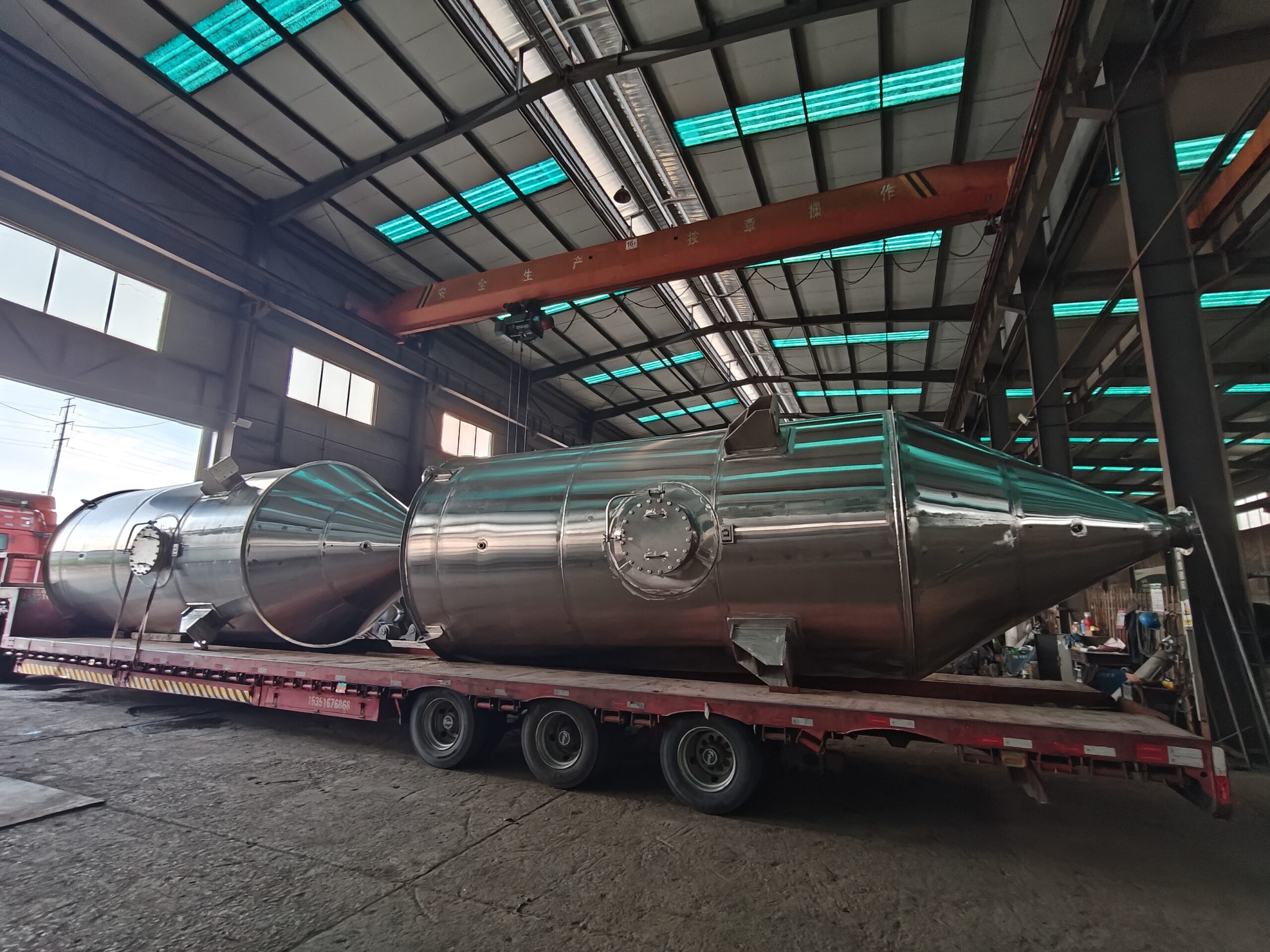
storage tank structure

Conical-Bottom Stainless Steel Tanks

Structural Features:The tank has an inverted conical bottom with a typical cone angle of 45°–60°. A full-bore discharge valve is installed at the lowest point. It is usually made of 304/316L stainless steel with a polishable interior. Key Advantages · Complete discharge: material converges to the center by gravity, achieving near-full drainage and minimizing residue. · Easy cleaning: no dead corners; CIP fluids drain smoothly. · Good for solid-liquid separation: yeast slurry, sediment and other solids can be drained separately from the bottom. Typical Applications Food & beverage (beer fermentation, juice and syrup), pharmaceutical & biological (liquids, pure water), chemical & environmental (slurry, sludge), oils & condiments (olive oil sediment separation).

Scroll to Top

NEED HELP?

WELCOME TO CONTACT US

we are always ready to provide you with better quality and services. Welcome to contact us or visit our company and factory in the following ways

Contact Us