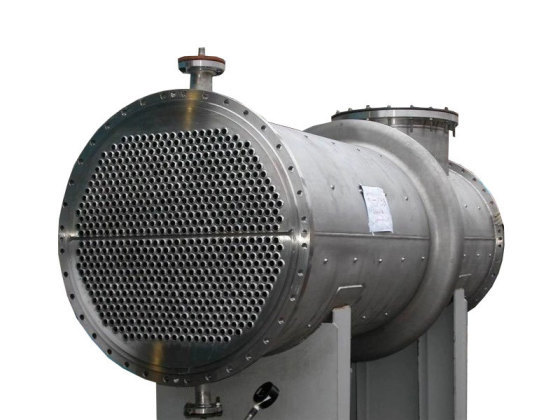
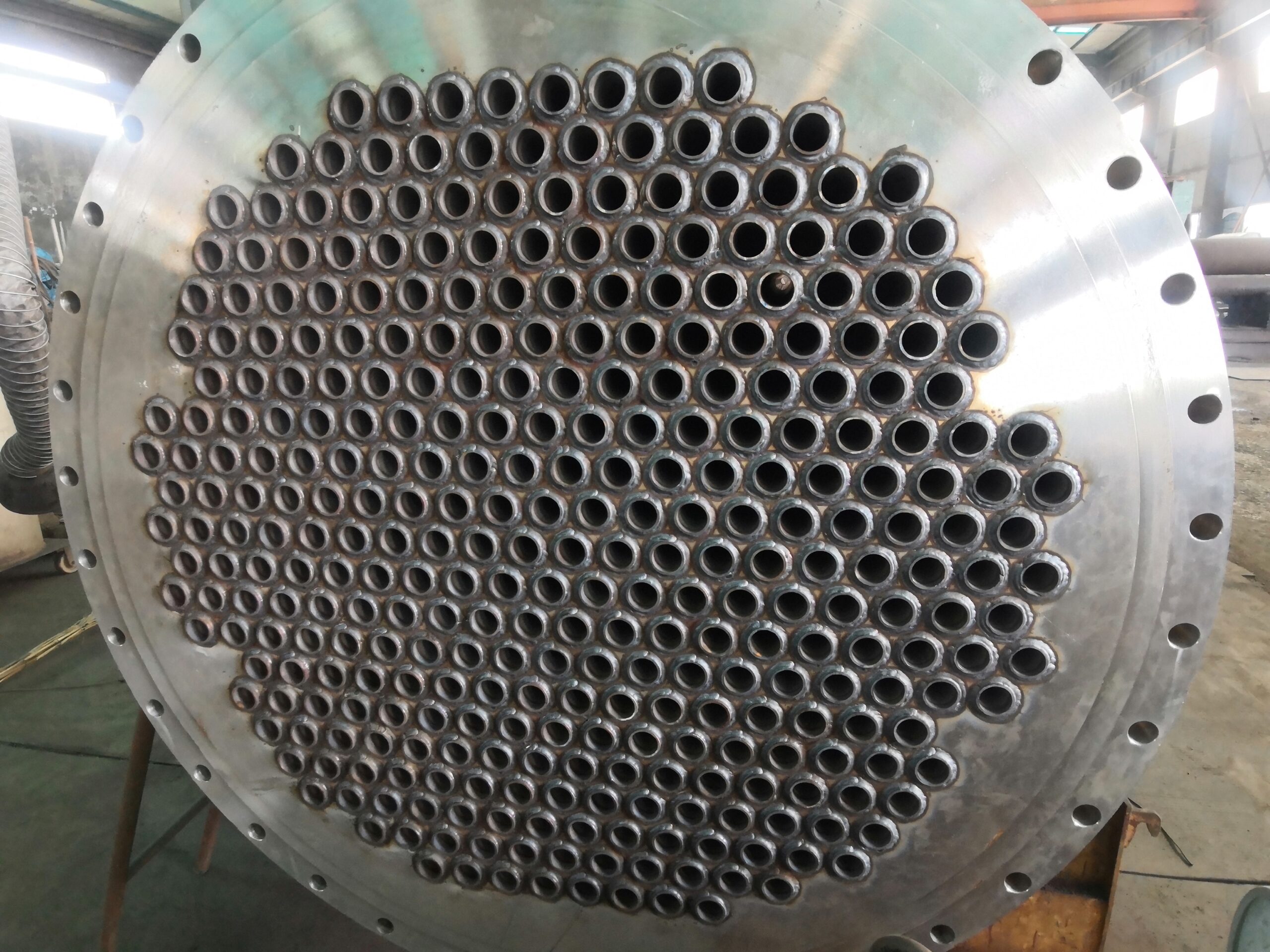


The shell and tube heat exchanger consists of shell, a bundle of tubes, tube sheets, and heads. One fluid flows inside the tubes, while another fluid flows outside the tubes within the shell. Heat is transferred through the tube walls. It is robust, reliable, suitable for high temperature and pressure applications, and is the most widely used type of heat exchanger in industry.
However, the shell side cannot be mechanically cleaned, and an expansion joint is required when the temperature difference between tubes and shell is large to prevent damage from thermal stress.
Quick Selection Guide for Shell & Tube Heat Exchangers
| Your Requirement | Recommended Type | Special Note (for Fixed Tube Sheet) |
|---|---|---|
| Lowest cost, simple structure, small temperature difference, clean shell-side fluid | Fixed Tube Sheet | Not suitable if shell-side cleaning is required |
| Shell-side prone to fouling, needs frequent cleaning | Floating Head | Allows tube bundle removal for mechanical cleaning |
| High temperature & high pressure, clean fluid on tube side, large temperature difference | U-Tube | Tube-side mechanical cleaning is difficult |
| Very high pressure (e.g., >10 MPa) | Fixed Tube Sheet or U-Tube | Fixed tube sheet has no dynamic seal, more reliable at high pressure |
| Very large temperature difference (>100°C) | Floating Head or U-Tube | Fixed tube sheet requires expansion joint, which has limited performance |